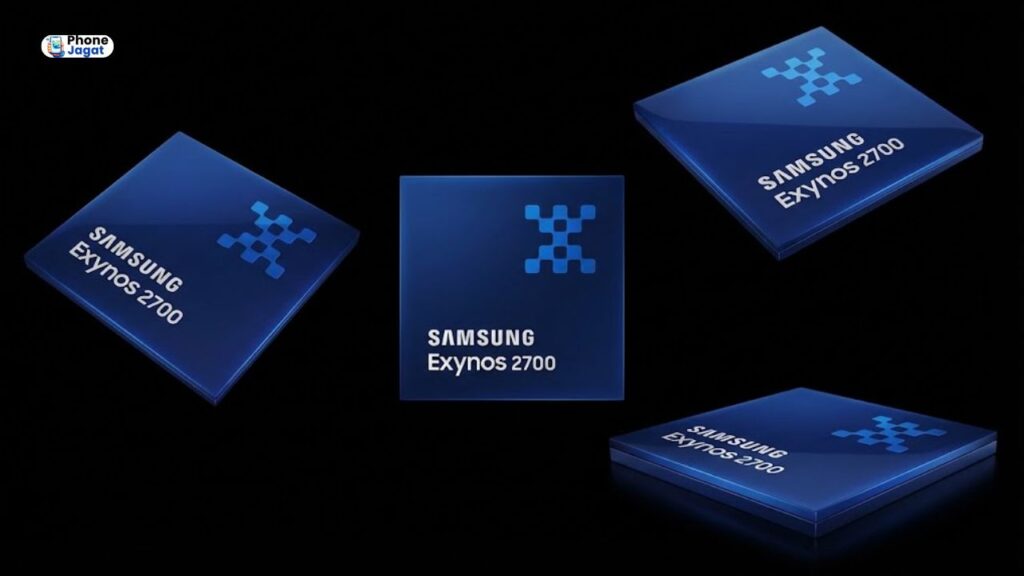
Latest Tech News: A Geekbench listing for the Samsung Exynos 2700 has surfaced online, and it has already become a hot topic of discussion among smartphone enthusiasts. While this appears to be an early benchmark, the leaked Geekbench data hints at Samsung’s next flagship chipset strategy. Furthermore, with a deca-core CPU, Xclipse GPU, and Android 16 support, the Exynos 2700 seems designed to strike a balance between raw power and efficiency.
Overall, if we carefully examine the initial details of the processor, Samsung appears to be preparing for a significant performance upgrade in its upcoming Galaxy devices. So, let’s delve into all the leaked details and Geekbench scores of the Samsung Exynos 2700 in detail.
Samsung Exynos 2700 Geekbench Scores Explained
Samsung Exynos 2700 Geekbench Scores Explained
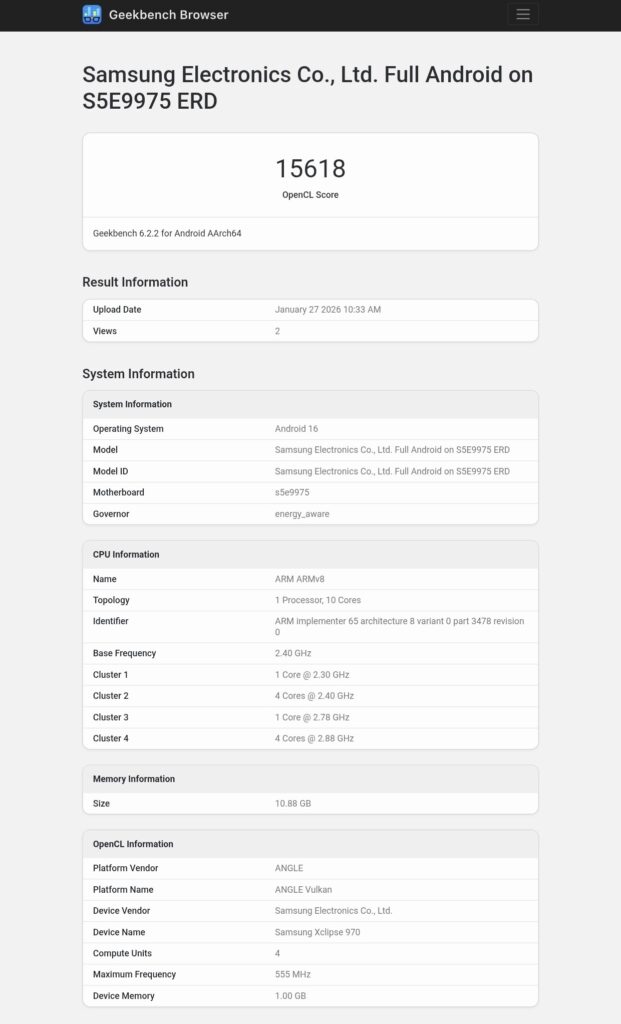
Initial Geekbench listings for the Exynos 2700 clearly indicate that Samsung has begun internal testing. The listing appears under a reference development board, which typically means the chipset is still in the validation phase. However, even at this stage, the Geekbench data provides valuable insights into the CPU layout, GPU performance, and software readiness. As a result, tech experts are already comparing it to rival flagship processors expected later this year.
Meanwhile, the OpenCL GPU score of 15,618 suggests that Samsung is focusing on graphical improvements. While benchmark scores don’t always reflect real-world performance, they do provide a directional view. Therefore, this early result indicates that the Exynos 2700 could offer smoother gaming and better sustained graphics compared to its predecessor.
Exynos 2700 CPU Architecture Details
Exynos 2700 CPU Architecture Details
When it comes to CPU design, the Exynos 2700 features a deca-core architecture, which isn’t very common in today’s flagship chipsets. Furthermore, Samsung is experimenting with multiple performance and efficiency clusters to optimize power consumption. As a result, this chipset can handle both heavy multitasking and background tasks more intelligently.
Its CPU configuration reportedly includes one core running at 2.30GHz, four cores at 2.40GHz, one high-performance core at 2.78GHz, and four top-tier cores at 2.88GHz. This layered approach suggests that Samsung is focusing on better sustained performance rather than short bursts of power. Overall, this design could help reduce throttling during long gaming or productivity sessions. Do you like phones powered by Exynos processors? Let us know in the comments!
GPU Performance and Xclipse 970 Expectations
It’s worth noting that Samsung has paired the Exynos 2700 with the Xclipse 970 GPU. Furthermore, Samsung’s Xclipse GPUs are based on AMD’s RDNA architecture, which performed well in the previous generation. Therefore, we can expect even better frame stability and improved visual effects this time around.
However, the recorded OpenCL score of 15,618 might seem low compared to final retail units. Keep in mind that this is an early listing, so performance tuning is likely still underway. Driver optimizations and thermal adjustments could significantly boost the GPU score before launch. Therefore, real-world gaming performance could be considerably better than these initial benchmarks suggest. More information is expected in the coming days.
Software Platform and Android 16 Integration
Exynos 2700 is already running on Android 16
One of the most interesting details is that the Exynos 2700 is already running on Android 16. This clearly shows that Samsung is aligning its next-generation silicon with future software releases. Furthermore, this early Android integration allows Samsung to better optimize One UI features at the hardware level.
In addition, early Android 16 testing reveals improved AI processing, better background task handling, and enhanced security features. Therefore, users can expect smooth software support for a long time after devices featuring this chipset are officially launched.
Overall, this early software preparation strengthens Samsung’s EEAT (Expertise, Authoritativeness, Trustworthiness) profile by demonstrating long-term planning and engineering confidence. What are your thoughts on the Exynos 2700? Share your opinion in the comments below!
Memory and Hardware Configuration
According to the Geekbench listing, the test device has 12GB of RAM, which has become standard for premium Android smartphones. This amount of memory ensures seamless multitasking and improved app retention, which will benefit users who rely on heavy productivity apps or demanding gaming sessions.
Meanwhile, the device information mentions “Full Android on S5E9975 ERD,” which clearly points to a reference development board. Therefore, the final consumer device may include additional hardware improvements, such as faster storage and better thermal management.
Overall, this Geekbench listing leak confirms that the current benchmark data represents an early snapshot rather than the final performance.
Device Information and Early Testing Signs
The Geekbench entry includes the manufacturer’s name, further confirming the authenticity of the test unit. Furthermore, we’ve observed that Samsung typically uses such internal boards to fine-tune CPU scheduling, GPU drivers, and power efficiency before mass production.
However, since this is not a retail device, some discrepancies in clock speeds or scores are to be expected. Therefore, it would be premature to draw any definitive conclusions at this stage. Nevertheless, this kind of early sighting usually indicates that while the official launch is still several months away, development is progressing rapidly behind the scenes.
What This Means for Upcoming Galaxy Devices
The Samsung Exynos 2700 is expected to power some regional variants of future Galaxy flagship smartphones. This time, Samsung seems determined to close the performance gap with competing chipsets from Qualcomm and MediaTek. As such, this early Geekbench performance could prove to be a turning point for the Exynos brand.
If Samsung can strike the right balance between performance, efficiency, and thermal control, the Exynos 2700 could regain user confidence. Therefore, upcoming Galaxy devices could finally deliver consistent performance across all regions. Overall, this development is encouraging for users who prefer Samsung’s in-house silicon.
Samsung Exynos 2700 Release Date, Timeline and Final Expectations
Samsung Exynos 2700 Release Date
So far, Samsung has not officially confirmed the Exynos 2700. However, based on previous launch cycles, we can expect more leaks and benchmark results to surface in the coming months. Meanwhile, performance optimization will continue behind the scenes.
Therefore, it’s best to consider this Geekbench listing as an early indicator rather than the final result. Overall, the Exynos 2700 looks quite promising on paper, and its true capabilities will become clearer closer to its launch.
Overall…
In conclusion, the initial Geekbench spotting of the Samsung Exynos 2700 offers an interesting glimpse into Samsung’s next-generation chipset strategy. The deca-core CPU, Xclipse 970 GPU, and Android 16 support emphasize balanced performance and long-term software optimization. However, since this is an early test, the final results may differ. Overall, the Exynos 2700 appears to be a step in the right direction for Samsung’s flagship ambitions. What are your thoughts? Let us know in the comments!
Apart from this, on Phone Jagat, we will bring you every new update related to the Samsung Exynos 2700, upcoming Galaxy devices, benchmark leaks, and official launch coverage. So, stay connected with us.