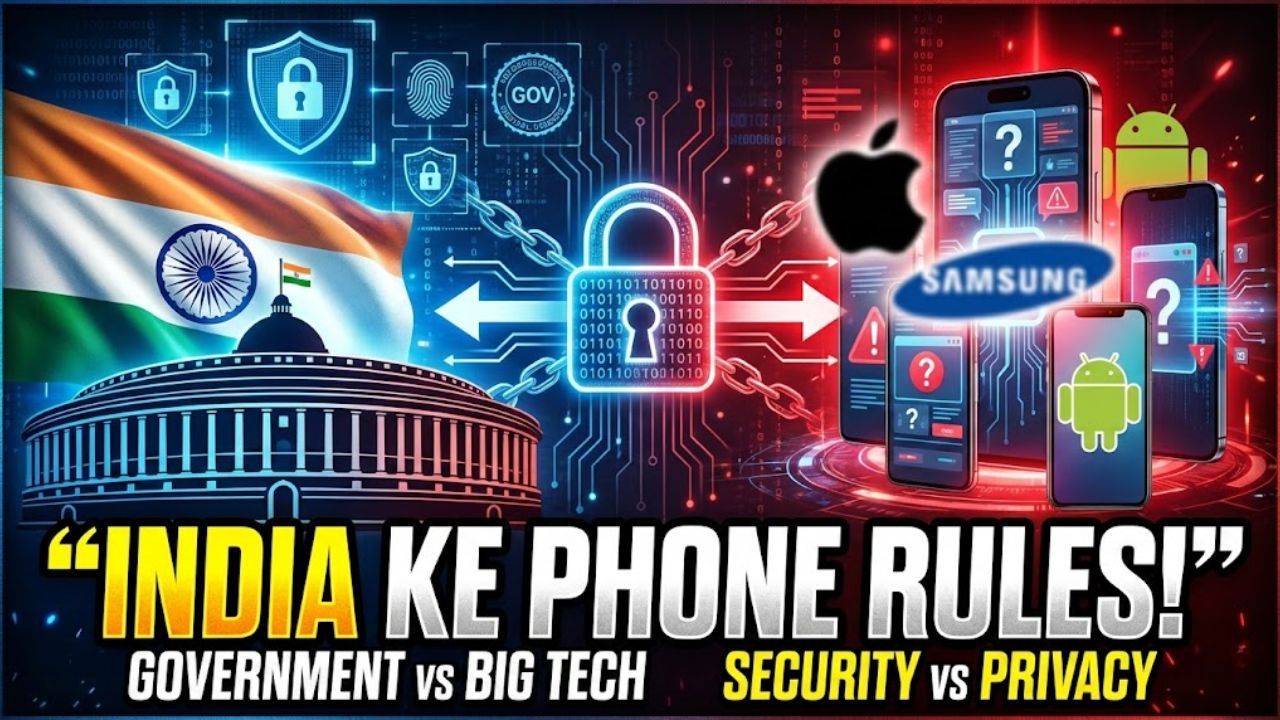
A major policy debate has begun in India regarding smartphone security. Recently, the new Smartphone Security Rules proposed by the central government have increased concerns among global tech companies and industry bodies. It should be noted that the objective of these rules is said to be to curb online fraud, data leaks, and privacy breaches, but companies like Apple, Samsung, Google, and Xiaomi believe that these rules could pose serious risks for them.
The government, on the other hand, states that around 750 million smartphones are currently in active use in India, and cases of digital fraud are continuously increasing. In such a situation, a strong regulatory framework for smartphones has now become necessary. So, in today’s article, let us understand the new Smartphone Security Rules in detail.
What does the government want to change?
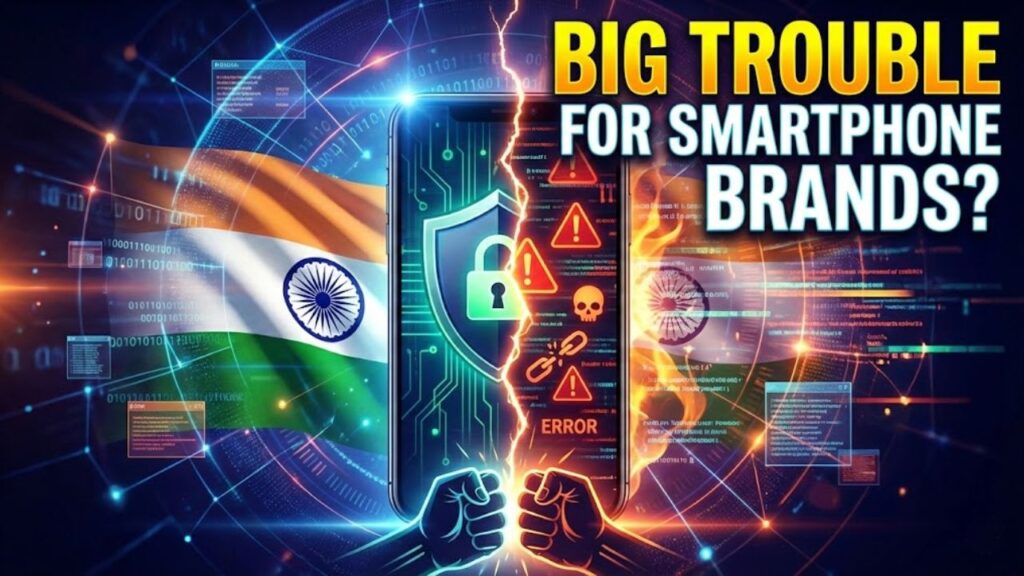
If we look at the proposed rules, according to these rules, smartphone manufacturers may be required to share their source code with the government. Along with this, devices will have to follow around 83 different security standards. In addition, it may be made mandatory to inform the government before any major software update, and source code testing will be conducted in government-designated Indian labs.
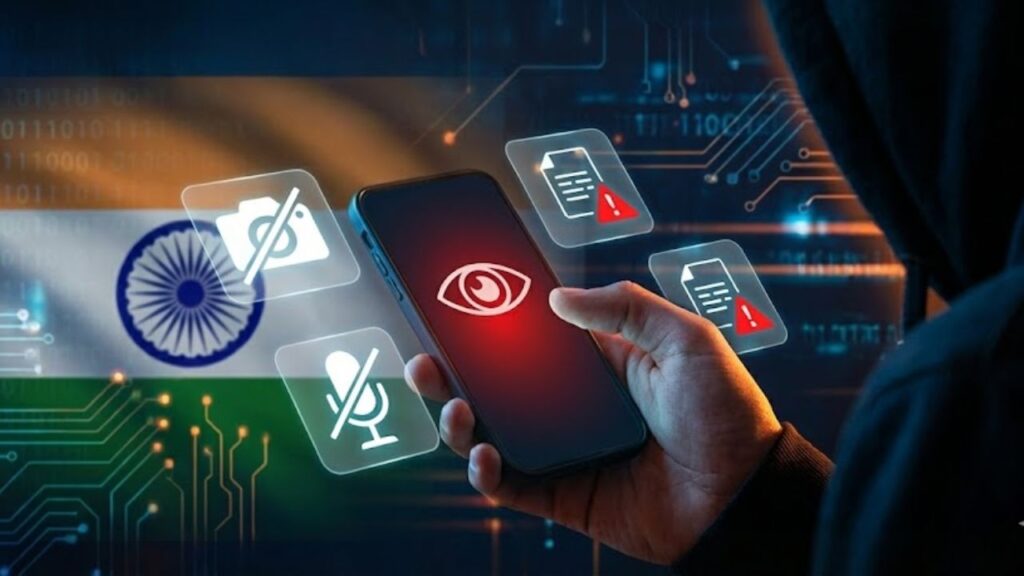
Under these rules, providing users with permission to uninstall pre-installed apps, restricting camera and microphone access in the background, and making automatic malware scanning mandatory on phones are also included. Apart from this, a condition has also been proposed to store device system logs on the phone for at least 12 months.
It should be noted that if all these rules are implemented, India will be included among the few countries where smartphones are under direct regulatory oversight. So now let us understand what exactly the government’s stand is behind implementing these rules.
What is the government’s stand?
It should be noted that the government has currently adopted a cautious approach on this issue. IT Secretary S. Krishnan has said that the concerns of the industry are being heard with an open mind, and it would be too early to reach any conclusion. According to him, these rules were first drafted in 2023, and now considerations are being made regarding their legal enforcement.
Apart from this, the government also argues that data security is no longer just a technical issue, but has become a matter linked to national interest.
Why are tech companies unhappy?
The strongest opposition to these proposed rules has come from companies like Apple, Samsung, Google, and Xiaomi. All these companies say that source code sharing is an extremely sensitive issue for them because it is proprietary information. They claim that such rules are not implemented in any major markets of the world, such as the EU, North America, or Australia.
Apple has earlier also refused to give source code to authorities in China and the United States, which makes it clear that the company does not want to make any compromise in this matter.
Apart from this, tech companies fear that instead of reducing security risks, access to source code could increase them further, and there could also be a risk of intellectual property leakage. Industry body MAIT has also issued a warning in this regard.
Warning from industry body MAIT
Industry association MAIT has also cautioned the government that practically implementing these rules will not be easy. MAIT says that large-scale source code review and vulnerability analysis are not technically feasible.
The association has also expressed concern that frequent malware scanning could affect phone battery life, taking government clearance for software updates would be unrealistic, and storing system logs for 12 months would create storage constraints, especially in budget smartphones.
How big is the stake for the Indian smartphone market?
If we go by the data from Counterpoint Research, Xiaomi holds around 19 percent share in India’s smartphone market, Samsung around 15 percent, and Apple close to 5 percent.
Experts believe that if the rules are implemented without any changes, it could also impact phone pricing, update timelines, and future launches. By the way, what is your opinion on this—should these rules be implemented? Do let us know through comments.
What is going to happen next?
It should be noted that consultations between the government and tech executives are currently ongoing, and according to sources, the next important meeting is going to be held on Tuesday. No final decision has been taken on the policy yet, and it is expected that the government may make some changes to the rules based on industry feedback or adopt a phased implementation approach.
What benefits will users get from the new Smartphone Security Rules?
If these rules are implemented, users may get better privacy controls and protection from background spying. On the other hand, phones may become more expensive, and delays in software updates may also be seen. This means that the biggest challenge for the government is to maintain a balance between security and user convenience. In the coming days, more updates related to the new Smartphone Security Rules may come out.
Fake News Busted: PIB Fact Check Rejects Source Code Sharing Claims
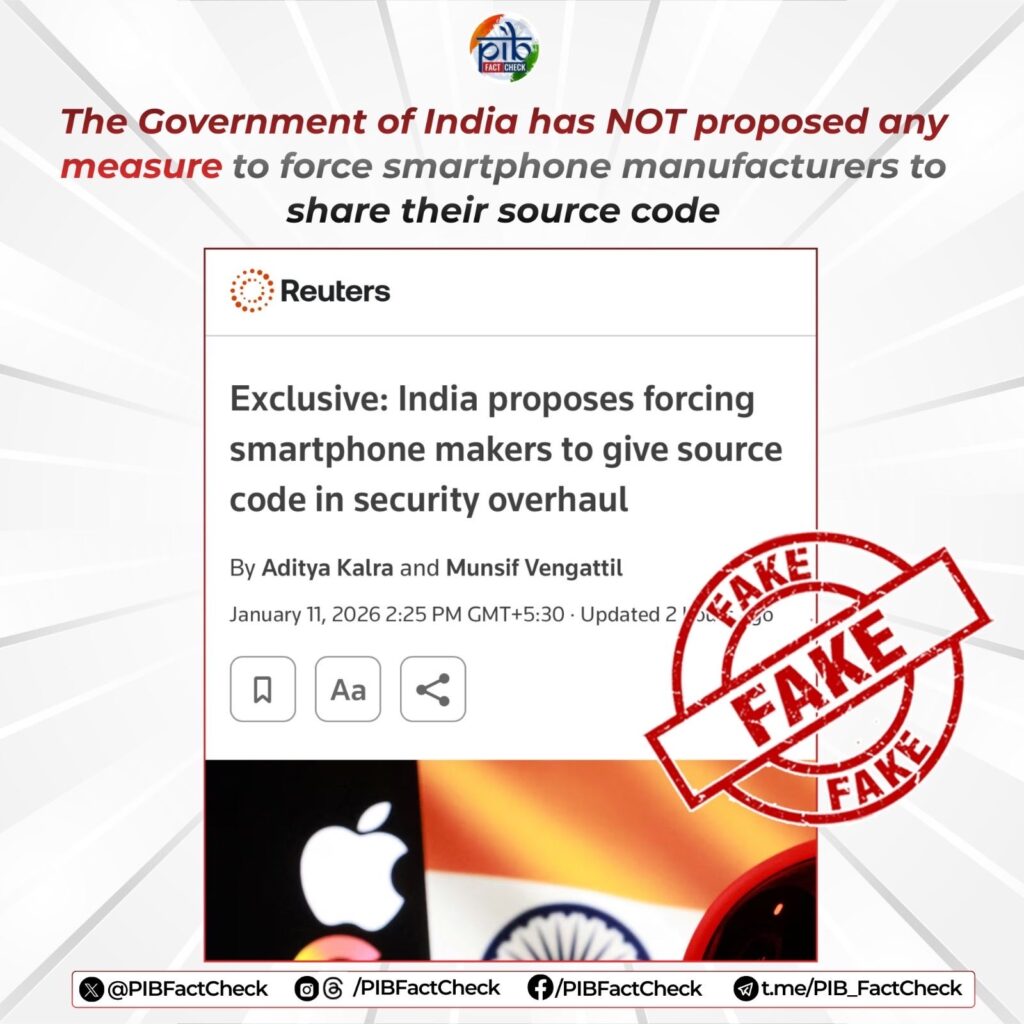
Meanwhile, the Government of India has issued an official clarification through PIB Fact Check, dismissing certain media reports as misleading.
PIB Fact Check has termed the claim made in a news report by Reuters, which suggested that India is proposing to force smartphone manufacturers to share their source code, as FAKE.
According to the clarification, the Government of India has not proposed any measure that would require smartphone manufacturers to share their source code. The government stated that the Ministry of Electronics and Information Technology (MeitY) has only initiated stakeholder consultations to design an appropriate regulatory framework for mobile security.
These consultations are described as a routine and standard process, where various security-related aspects are discussed with industry stakeholders. PIB Fact Check further clarified that no final regulations have been framed so far, and any future framework will be introduced only after due consultation with all concerned parties.
The government has also advised users and readers to rely on official sources and verify information before believing or sharing such reports.
Overall…
According to PIB Fact Check, the claims regarding mandatory source code sharing are completely fake. The government has clarified that no such proposal has been finalized and that only stakeholder consultations are currently underway. This makes it clear that the reported news should not be taken as final, and any future smartphone security framework will be introduced only after proper discussion with all concerned parties.
FAQs
What are the new Smartphone Security Rules proposed in India?
The proposed rules aim to improve smartphone security by enforcing strict standards, source code checks, malware scanning, and better privacy controls.
Why does the Indian government want these smartphone rules?
The government says rising digital fraud, data leaks, and over 750 million active smartphones make a strong regulatory framework necessary.
Why are companies like Apple, Samsung, and Google opposing the rules?
Tech companies fear source code sharing may risk intellectual property, increase security threats, and is not practiced in other major global markets.
How will these rules affect smartphone users in India?
Users may get stronger privacy protection and security, but phones could become costlier and software updates may face delays.
Will these Smartphone Security Rules be implemented immediately?
No final decision has been taken yet. The government is consulting industry leaders and may modify or roll out the rules in phases.
To stay updated on the latest smartphone news, technology updates, and important policy developments, stay connected with Phone Jagat.